Behind the Thinking Machines Fallout: Power Struggles and OpenAI’s Quiet Advantage
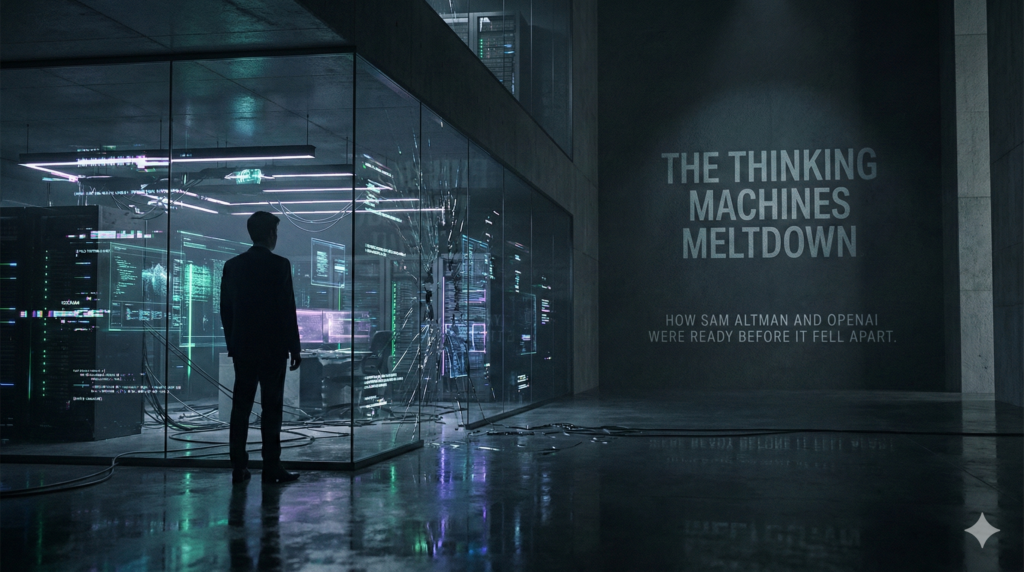
What initially looked like a sudden and messy breakup at Mira Murati’s Thinking Machines Lab was anything but. New reporting reveals the split had been brewing for months, with internal power struggles, failed acquisition talks, and growing frustration among co-founders over the company’s direction. Behind the scenes, Sam Altman was already in quiet discussions with Thinking Machines leadership — positioning OpenAI to move quickly when the situation finally unraveled. As talent departed and leadership fractured, the episode became a clear example of how today’s AI power dynamics reward preparation over reaction — and how OpenAI continues to shape the industry not just through technology, but through timing.
What Happens When an AI Lab Admits It Might Not Fully Understand Its Creation
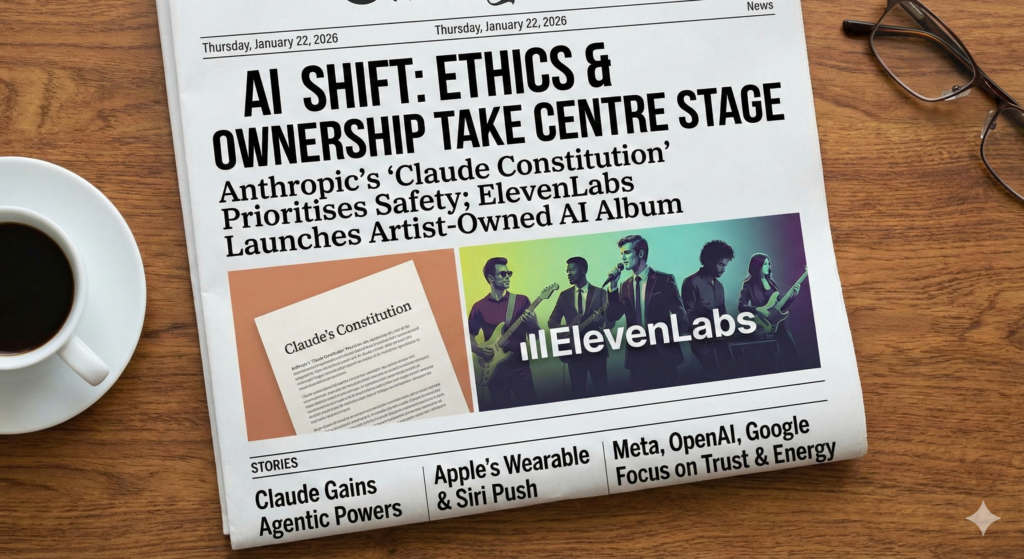
Today’s AI rundown saw Anthropic publish Claude’s Constitution — a rare, philosophy-heavy document that prioritises safety and ethics over usefulness and openly acknowledges the possibility that its AI could matter morally — while ElevenLabs signalled a cultural shift in AI music by releasing an artist-owned, royalty-retaining AI album with major names. Claude also gained new agent-like powers through a Skills marketplace, Apple reportedly accelerated its AI ambitions with a camera-equipped wearable and a chatbot-style Siri, and across the industry Meta, OpenAI, and Google pushed forward on models, infrastructure, and education — underscoring a clear shift from pure capability races to public debates about ethics, ownership, energy, and trust in AI.
AI Dominates Davos: Why the Window to Adapt Is Closing Faster Than Expected

AI Dominates Davos: Why the Window to Adapt Is Closing Faster Than Expected
The world’s elite converged on World Economic Forum in Davos this week — and there was one topic on everyone’s mind: artificial intelligence.
The message from industry leaders was strikingly consistent:
AI disruption is arriving faster than expected — and the window for individuals and companies to adapt is shrinking fast.
From geopolitics to hiring, from coding to creativity, AI is no longer a future concern. It’s a present-day reshaper of work, power, and competitive advantage.
The Rise of Self-Building Software and the Quiet Panic Behind It

The AI industry is seeing an intensifying talent shake-up, with researchers and leaders moving between top labs more freely than ever. While headlines focus on models and funding, the real power shift is happening at the human level — where experience, trust, and expertise remain the true competitive advantage. In frontier AI, people are still the moat.
OpenAI hit $20B+ annualised revenue in 2025, tripling year-on-year. TechIE Musk seeks up to $134 billion from OpenAI and Microsoft in ‘wrongful gains’
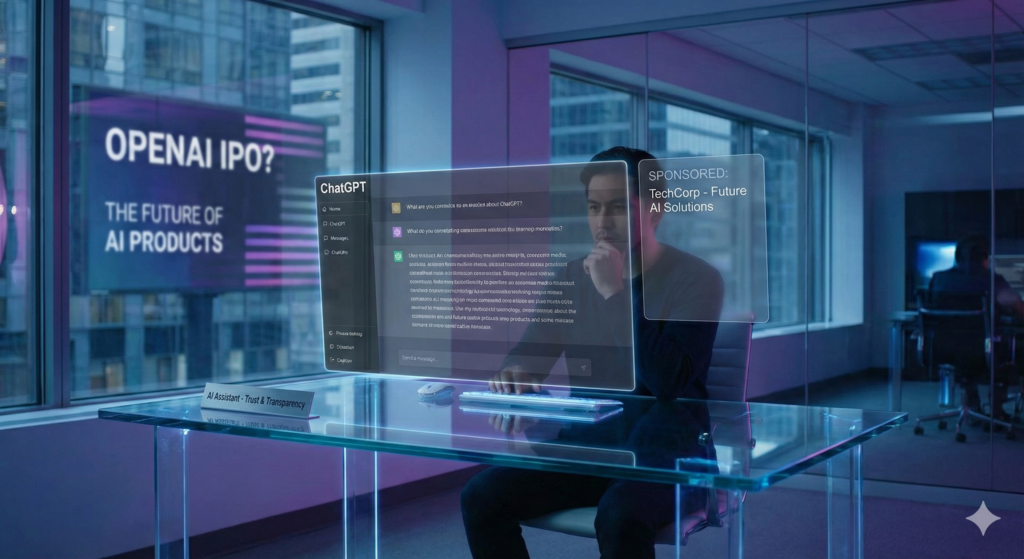
OpenAI’s decision to introduce ads into ChatGPT marks a watershed moment for the AI industry. While the company is positioning ads as carefully separated from answers and constrained by strict exclusions, the shift signals growing pressure to monetise large-scale AI systems ahead of a potential IPO.
The real test won’t be whether ads exist — but how they feel. AI assistants occupy a far more intimate role than search engines or social feeds, and even subtle erosion of trust could have outsized consequences.
If OpenAI executes this well, it may establish the industry template for funding free AI access. If it missteps, it could accelerate user flight toward paid, open-source, or privacy-first alternatives.
Either way, this is no longer just an OpenAI story — it’s a preview of where AI as a product is heading next.
Models Are Powerful. People Still Decide Who Wins – Inside the Latest AI Power Shift
The AI industry is seeing an intensifying talent shake-up, with researchers and leaders moving between top labs more freely than ever. While headlines focus on models and funding, the real power shift is happening at the human level — where experience, trust, and expertise remain the true competitive advantage. In frontier AI, people are still the moat.
With its latest Personal Intelligence upgrade, Google is quietly turning Gmail, Photos, YouTube, and Search into an AI advantage
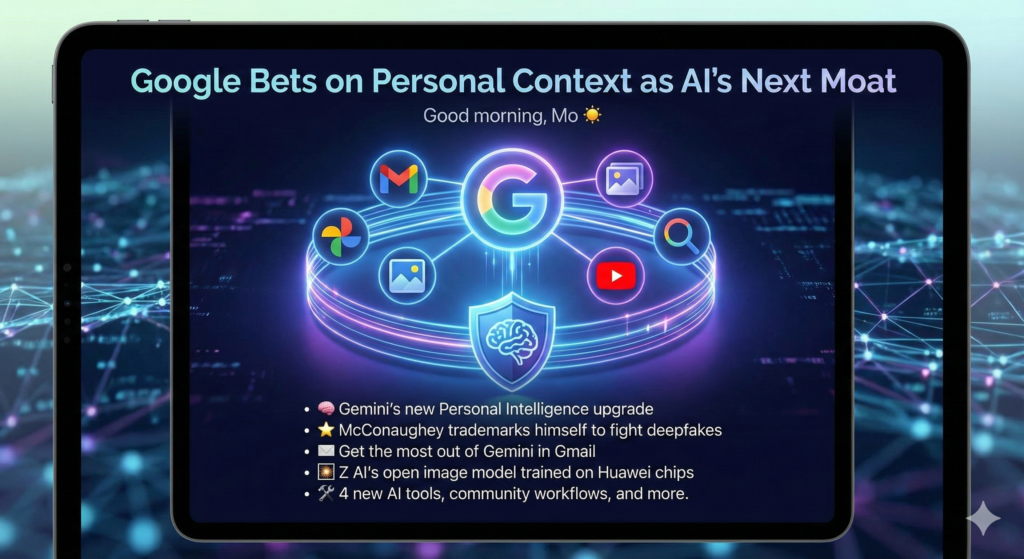
Google is betting that personal context — not raw model power — will be the next major AI differentiator. Its new Gemini Personal Intelligence feature connects Gmail, Photos, YouTube, and Search to deliver deeply personalised assistance that rivals can’t easily copy. Alongside moves to protect identity from deepfakes, growing ROI from AI agents in the workplace, and China releasing open AI models trained without U.S. chips, the signal is clear: AI is shifting from flashy capability to trusted, integrated, real-world usefulness.
This Week in AI: Infrastructure Wars, Smarter Coding, and Medicine Designed by Nature.
AI isn’t just evolving in models and apps — it’s reshaping infrastructure, software workflows, and even drug discovery. This week’s developments show how the race is increasingly about scale, responsibility, and real-world impact.
So… Google Is Powering Siri Now. Here’s Why That Matters.
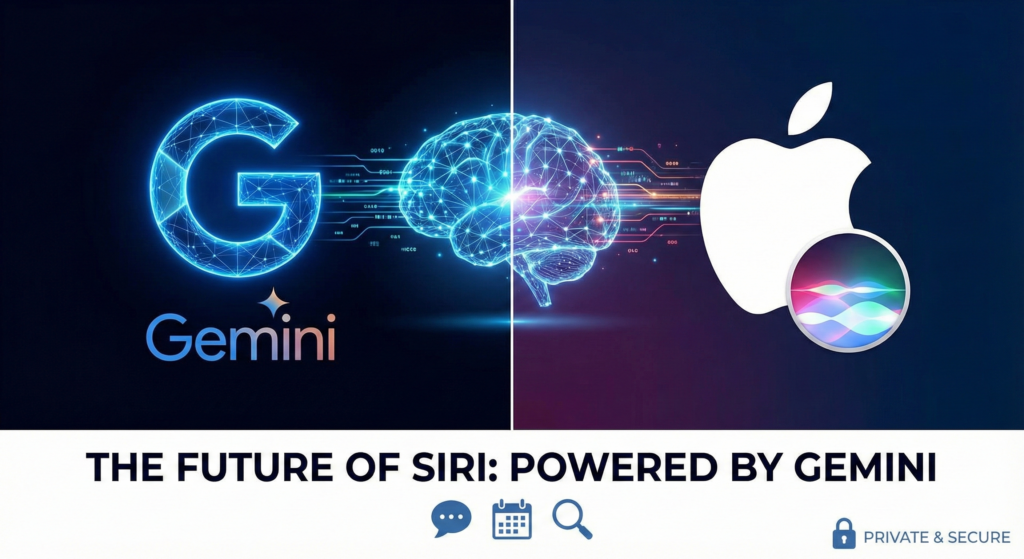
Apple has finally made its AI direction clear — and it’s a surprising one. After months of uncertainty around Siri, Apple has confirmed a multi-year deal with Google, making Gemini the core AI system behind Siri’s long-awaited upgrade.
The move quietly sidelines Apple’s much-talked-about ChatGPT partnership and hands a major win to Google, signalling a broader shift across the industry: even the biggest tech companies are choosing proven partners over pride.
Alongside new tools from Anthropic and Perplexity and fresh data from Microsoft showing a widening global AI adoption gap, this week’s updates point to one clear trend — AI is moving out of the hype phase and into practical, everyday use, faster than most people realise
AI Is Becoming Infrastructure — and That Changes Everything

AI today is being shaped by a clear convergence of forces: governments are moving from high-level principles to direct product-level crackdowns on unsafe systems like xAI’s Grok, while at the same time standardising approved AI tools inside the state; frontier labs such as OpenAI, Anthropic, and Meta are shifting focus from headline model launches to preparedness, infrastructure, and agent-based systems that can plan and act across real workflows; and beyond the labs, AI is rapidly embedding itself into daily life, from cyber defence and edge infrastructure to health, where millions now use tools like ChatGPT for symptom checks and medical understanding—making safety, accountability, and trust as important as raw capability as AI quietly becomes part of the fabric of work, government, and everyday decision-making.