
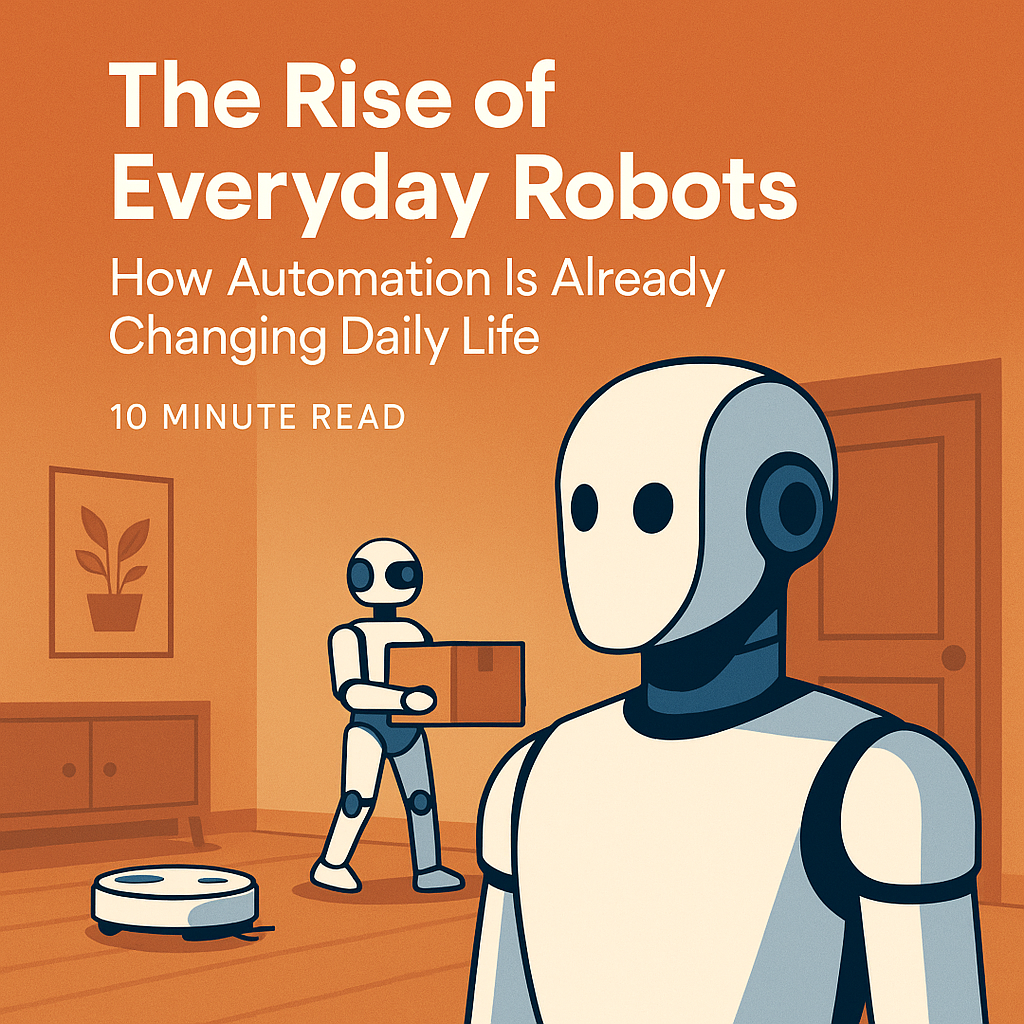
The Rise of Everyday Robots — How Automation Is Already Changing Daily Life
When most people think of robots, they imagine science fiction: machines walking the streets, androids working in offices, or a futuristic world where humans and robots live side by side. The truth is, robots are already here — and they’re much more common than you might realise.
From cleaning your floors to delivering your takeaway, robots are slowly blending into the background of daily life. And while some are impressively capable, others still struggle in ways that are both frustrating and funny.
In this blog, we’ll explore how robots are making their mark at home, at work, and in public spaces, the benefits they bring, and the challenges they still face.
Robots in the Home
The most visible robots today are domestic helpers. They’re not humanoid servants like in the movies, but they’re still changing the way we manage everyday chores.
-
Robotic vacuums: Devices like Roomba or Dyson’s 360 models are now commonplace. They map out your house, avoid obstacles, and some even empty their own dust bins.
-
Robot lawnmowers: These quietly patrol gardens, trimming grass without needing supervision.
-
Kitchen helpers: Smart coffee machines, robot baristas, and even cooking assistants are emerging.
-
Companion robots: Designed for children, pets, or the elderly, these machines provide entertainment, reminders, or even emotional support.
Real-world example: In Japan, companion robots are already used in care homes to reduce loneliness among elderly residents — showing the real human impact of automation.
Robots at Work
Factories have used robots for decades, but the new wave of automation is spreading beyond industrial arms and assembly lines.
-
Warehouses: Amazon alone has more than 500,000 robots moving packages in its fulfilment centres. These machines can shift stock faster than any human, cutting costs and boosting efficiency.
-
Healthcare: Robots now assist with surgery, deliver medication to wards, and move supplies around hospitals.
-
Construction: Semi-autonomous bricklaying machines and 3D-printing robots are starting to shape how buildings are made.
-
Offices: Robotic process automation (RPA) isn’t a physical robot but software that handles repetitive digital tasks — like generating invoices or scheduling appointments.
Impact: For small businesses, this means fewer hours spent on admin and more time available for growth.
Robots in Public Spaces
Robots aren’t just confined to private spaces. They’re stepping into the public eye in ways that once seemed futuristic.
-
Delivery robots: In Milton Keynes, Starship robots are a familiar sight, trundling along pavements with grocery orders.
-
Hospitality: Some restaurants are trialling robot waiters to deliver food to tables.
-
Airports: Navigation robots help travellers find their gates or carry luggage.
-
Security: Patrol robots equipped with cameras and sensors keep watch over malls and offices.
These robots are still novelties, but each trial pushes society closer to normalising them in everyday life.
The Benefits
So why are robots on the rise? The advantages are hard to ignore:
-
Efficiency: Robots don’t need breaks, so they can operate 24/7.
-
Safety: Dangerous jobs like bomb disposal or disaster recovery are better handled by machines.
-
Cost savings: In the long run, automation reduces labour costs and minimises errors.
-
Accessibility: Robots can give independence to people with disabilities or mobility issues.
For small business owners, the potential lies in freeing up time. Let robots handle repetitive work while humans focus on strategy, relationships, and creativity.
The Challenges
Robots aren’t perfect — and our own AI Cyclops shorts love to showcase just how hilariously clumsy they can be. The main challenges include:
-
Cost: Advanced robots remain expensive, putting them out of reach for many households or small businesses.
-
Technical limits: Despite billions in investment, robots often fail at simple tasks (like picking up a cup of coffee without spilling it).
-
Job displacement: Automation raises concerns about the future of human employment.
-
Trust: People are still hesitant about relying on machines, especially in sensitive areas like childcare or medicine.
These challenges don’t stop innovation, but they do highlight the long journey ahead.
Final Thoughts
The rise of everyday robots is no longer a story about the distant future — it’s happening right now. They’re not glamorous, they’re not perfect, and they sometimes fail in spectacularly funny ways. But they are reshaping daily life, one step (or one wheel) at a time.
At AI Cyclops, we dig into the truth about robotics: the successes, the failures, the hype, and the hard reality. Because if we understand robots today, we’ll be better prepared for the world they’re building tomorrow.
👉 Want to get ahead of the curve? Join our next workshop and learn how AI and automation can transform your business.