The 5 Most Common ChatGPT Mistakes (And How to Fix Them)
The 5 Most Common ChatGPT Mistakes (And How to Fix Them)
If you have spent any time on LinkedIn recently, you have likely seen breathless claims that AI will do your job for you by lunchtime. Yet when most professionals in the UK actually sit down to use ChatGPT, the reality is often underwhelming. You ask it for a report and it hands back a generic, fluffy mess that reads like a corporate brochure from 1998. It is tempting to conclude that the technology is overhyped — or simply broken.
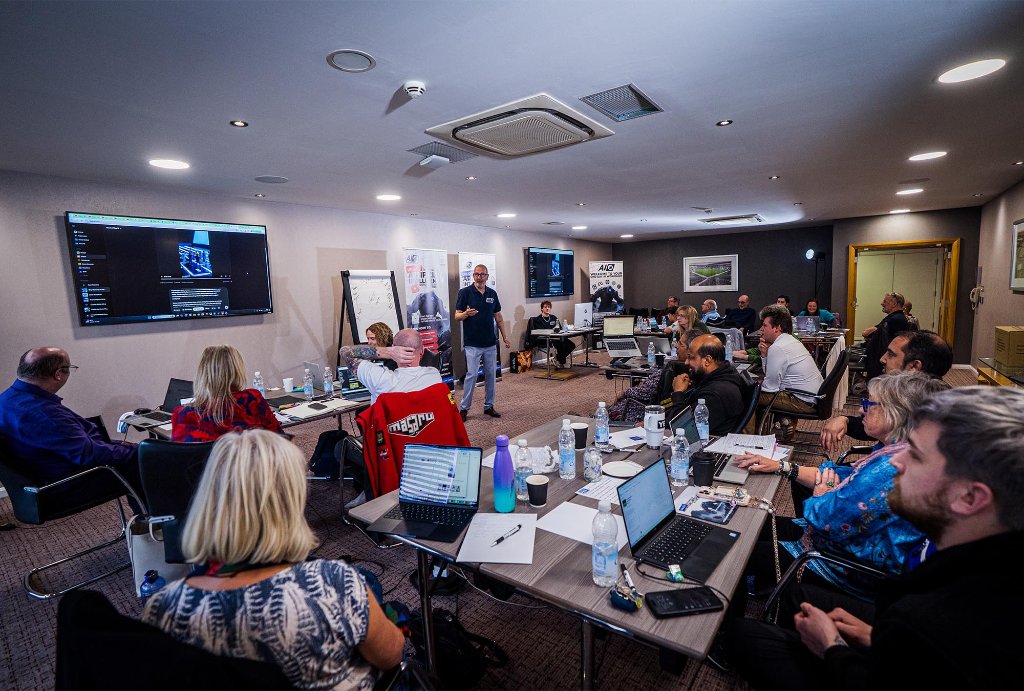
Here is the truth: after training hundreds of professionals at our Milton Keynes headquarters, the team at The AI Cyclops has found that the problem is almost never the AI. It is the input. Even self-taught users who have been working with the tool for over a year consistently fall into the same traps. Below, we break down the five most common ChatGPT mistakes we see in the wild, and exactly how to fix each one.
- Context is king: ChatGPT is a reasoning engine, not a search engine. It needs background information to produce useful output.
- Iteration is essential: The first response is rarely the best. Refining your prompt is a standard — and expected — part of the workflow.
- Fact-checking is non-negotiable: Large Language Models prioritise linguistic patterns over factual accuracy. Always verify statistics, names, and dates.
- Personas sharpen output: Telling ChatGPT who it is writing for transforms generic content into targeted, relevant communication.
- Training closes the gap fast: Most common prompting hurdles are resolved within the first hour of a structured AI training session.
ChatGPT Mistakes #1 and #2: Weak Prompts and the One-and-Done Mentality
The single most common mistake we see is what we call Search Bar Syndrome. For two decades, we have been conditioned to type the shortest possible query into Google. ChatGPT does not work that way. When you fire a five-word prompt at it, you leave the AI to guess your business size, location, tone of voice, audience, and goals. Unsurprisingly, it guesses wrong.
According to a 2024 report by the Boston Consulting Group, employees who received structured guidance on AI prompting outperformed self-taught users by a significant margin on complex tasks. The differentiator was knowing how to give the tool the context it needs.
The Fix: Provide the "Why" and the "Who"
❌ Weak Prompt:
"Write a social media post about our new office in Milton Keynes."
✅ Strong Prompt:
"We are an architecture firm in Milton Keynes moving to a new sustainable office. Write a LinkedIn post for local business clients. The tone should be proud but professional, highlighting our community commitment and five years of growth."
Closely linked to this is the one-and-done mentality — treating ChatGPT like a vending machine. If the first answer is poor, many users walk away and write the tool off entirely. In reality, the magic happens in the third, fourth, and fifth corrections. Think of it like briefing a capable but new member of staff: you would give feedback, clarify expectations, and refine the brief together.
How to Refine Your Prompts Effectively
- Too long? Say: "Make this more concise — aim for three short paragraphs."
- Sounds robotic? Say: "Remove the corporate adjectives and write in a warmer, more human tone."
- Misses the point? Say: "You have focused on X, but I need the emphasis to be on Y."
Want to practise this live? Our AI in Action workshops in Milton Keynes walk you through iterative prompting until your output reaches a standard that genuinely saves time.
ChatGPT Mistakes #3 and #4: Ignoring Personas and Skipping Fact-Checks
By default, ChatGPT aims for a neutral, inoffensive middle ground. That is fine for a general query, but a real problem when you need content tailored to a specific audience. A proposal for a risk-averse finance director requires a completely different tone, vocabulary, and structure from a piece aimed at a creative marketing team. ChatGPT cannot make that distinction unless you tell it to.
The Fix: Define Your Reader Before You Write
- Who is reading this? (e.g., a senior HR manager at a 200-person manufacturing firm)
- What do they already know? (e.g., familiar with basic AI concepts but not technical terminology)
- What do they care about? (e.g., reducing admin burden and staying compliant with employment law)
- What action should they take? (e.g., book a discovery call with our team)
Equally dangerous is accepting the first draft as final. Large Language Models are trained to produce text that is linguistically plausible — not factually accurate. The model predicts the most statistically likely next word, which means it can generate confident-sounding falsehoods, known as hallucination. A well-publicised 2023 case saw a US lawyer submit a legal brief containing multiple fictitious case citations generated by ChatGPT. The lawyer was sanctioned by the court.
The Fix: Build a Verification Step Into Your Workflow
- Treat every ChatGPT output as a first draft, not a finished product.
- Cross-reference any statistics, dates, or named sources before publishing.
- Ask ChatGPT: "Are you confident in the accuracy of these figures? What are the limitations of your response?"
- For regulated industries (legal, financial, medical), always have a qualified professional review AI-generated content.
ChatGPT Mistake #5: Using the Tool Without a Clear Goal
This is perhaps the subtlest of the common ChatGPT mistakes, but it wastes the most time. Users often open ChatGPT with a vague sense that they want "something about X" — without defining the format, length, purpose, or what success looks like. The result is a circular conversation that never quite lands.
The Fix: Use a Prompt Template
Before you type anything into ChatGPT, answer these four questions:
- What is the output? (e.g., a 300-word email, a bullet-point summary, a five-slide outline)
- Who is it for? (e.g., a new client, an internal team, a trade publication)
- What tone is required? (e.g., formal, conversational, urgent, reassuring)
- What must it include or avoid? (e.g., include our pricing; avoid jargon)
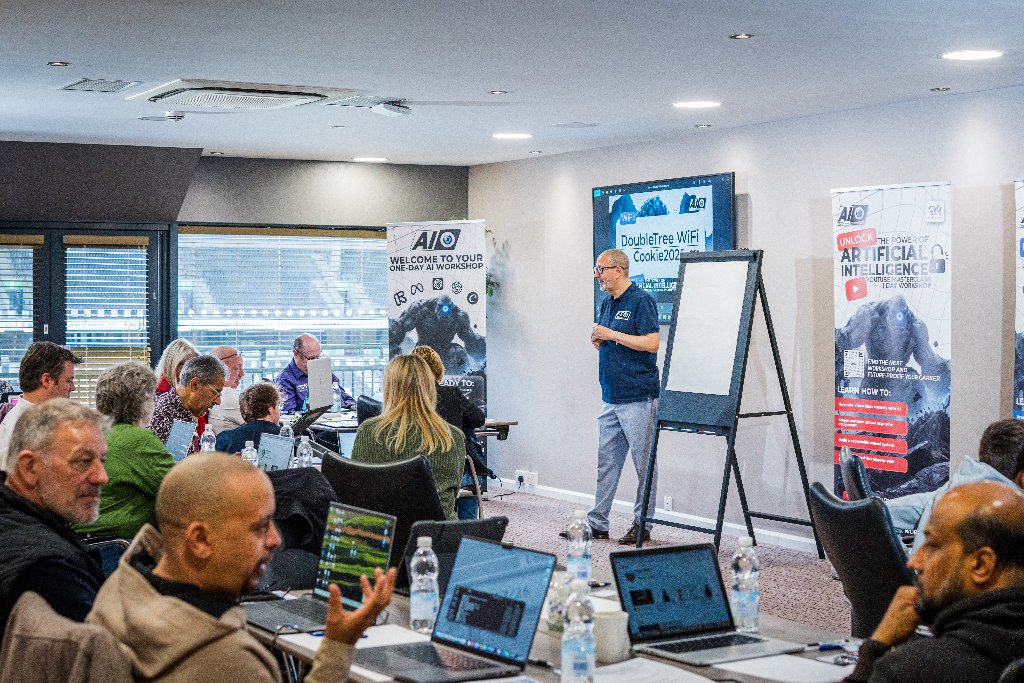
At The AI Cyclops, we provide every delegate on our AI training courses with a personalised prompt template library built around their specific role and industry. Within a single session, most participants move from vague, frustrating interactions to producing output they can actually use.
Frequently Asked Questions
Why does ChatGPT keep giving me generic answers?
Generic answers are almost always the result of a generic prompt. ChatGPT has no visibility of your business, your audience, or your goals unless you explicitly provide that context. The more specific your input, the more useful the output.
Is ChatGPT reliable enough to use for professional content in the UK?
ChatGPT can be highly effective for drafting, summarising, brainstorming, and structuring professional content. However, any factual claims, statistics, legal references, or regulated content must be verified by a qualified professional before use.
How many prompts does it typically take to get a good result?
In our experience training professionals across the UK, most high-quality outputs are reached within three to five prompt iterations. Users who expect perfection on the first attempt consistently underuse the tool.
Does AI training actually make a difference to how well ChatGPT works?
Significantly, yes. Structured AI training teaches users how to construct effective prompts, apply iterative refinement, and identify when output needs to be fact-checked. Most delegates notice a tangible improvement within the first hour of structured practice.
What is the biggest single improvement I can make to my ChatGPT prompts right now?
Add context. Before you ask ChatGPT anything, spend 30 seconds writing two or three sentences about who you are, what you need this for, and who will be reading the output. That single change will improve your results more than any other adjustment.
Can these ChatGPT mistakes affect business productivity?
Absolutely. Poor prompting habits mean professionals spend more time editing AI output than they would have spent writing from scratch, which negates the productivity benefit entirely.
The Bottom Line
ChatGPT is a genuinely powerful tool — but it is only as powerful as the instructions you give it. The five mistakes outlined above are not failures of technology. They are failures of technique, and technique can be learned.
At The AI Cyclops, based in Milton Keynes, we help UK professionals and teams move from frustrated, hit-and-miss AI use to confident, consistent, time-saving workflows. Get in touch with our team to find out more about our AI training workshops and consultancy services.
From AI-curious to AI-confident in one day.
Join one of our hands-on AI workshops in Milton Keynes. CPD-certified, beginner-friendly, and packed with real outputs you can use the same week.
Training your team on this?
You might also like

Where AI Actually Saves Time in a Small Business
AI is supposed to save businesses time — but where exactly? This guide covers the seven areas where AI genuinely delivers for small businesses.
Read more →
Stop Watching AI From the Sidelines: Start Using It in Your Business
The AI Cyclops Practical AI for Business Workshop gives small business owners hands-on experience building real AI workflows, agents and content — no technical background needed.
Read more →
LinkedIn and SEO in the Digital Age: Why Businesses Need Both to Stay Visible
LinkedIn and SEO work best together. Discover why UK businesses need both to build visibility, authority and trust in 2026 — and how to do it practically.
Read more →