
LinkedIn and SEO in the Digital Age: Why Businesses Need Both to Stay Visible
- LinkedIn and SEO work best when they reinforce each other — not as separate strategies.
- Modern buyers research businesses across multiple touchpoints before making contact.
- SEO, GEO and AEO are converging — businesses need to be discoverable by both people and AI tools.
- One piece of expert content can be repurposed into a full content ecosystem across LinkedIn, your website and beyond.
- Commercially relevant visibility matters more than likes, follower counts or keyword rankings.
- The AI Cyclops runs CPD-certified LinkedIn and SEO & GEO Masterclasses in Milton Keynes from £199.
LinkedIn and SEO in the Digital Age: Why Businesses Need Both to Stay Visible
The way people discover businesses has changed — and LinkedIn and SEO sit right at the centre of that shift. A potential customer might find you through Google. They might see one of your LinkedIn posts. They might ask ChatGPT for a recommendation, notice your name in the comments on somebody else's post, visit your profile and then spend ten minutes deciding whether they trust you.
That means visibility in 2026 is no longer about simply having a website or posting occasionally on social media. Businesses need to build visibility, authority and trust across multiple digital touchpoints — and understanding how LinkedIn and SEO work together is one of the most practical things an SME can do right now.
If you want to see how this works in practice, explore our AI in Action case studies from businesses already doing this well.
---Why Your Customer Journey Rarely Starts — or Ends — in One Place
Think about the last time you researched a business before buying. You probably didn't visit one page and immediately decide. You may have searched the company on Google, looked at reviews, visited the website, checked the founder's LinkedIn profile, scrolled through recent posts, and perhaps even asked an AI assistant about the service.
Your customers are doing exactly the same thing.
This is a well-documented shift in buyer behaviour. According to research published by the Chartered Institute of Marketing, the average B2B buyer consumes between five and eight pieces of content before making contact with a supplier. That content is spread across websites, social platforms, review sites and — increasingly — AI-generated summaries.
Your website, LinkedIn profile, Google presence, content, reviews and wider digital footprint all contribute to the same fundamental question:
Can people find you, understand you and trust you?
---LinkedIn and SEO Perform Different Jobs — and That Is Their Strength
A common mistake is treating LinkedIn and SEO as competing priorities. They are not. They serve different stages of the same journey.
What LinkedIn Does Best
LinkedIn creates professional visibility and trust. It helps you reach decision-makers, demonstrate expertise through consistent content, build relationships before a sale and stay visible to people who already know you. For B2B businesses in particular, LinkedIn is where familiarity is built — often long before a sales conversation begins.
People buy from people they recognise. If someone repeatedly sees useful posts from you, reads your comments and understands what you do, you are building credibility at no direct cost.
Your LinkedIn profile should not simply tell people where you have worked. It should answer four questions clearly:
- Who do you help?
- What do you actually do?
- Why should they believe you?
- What should they do next?
Treat it more like a landing page than a CV. Your headline, banner, About section, Featured area and recent posts should all reinforce the same message.
What SEO Does Best
SEO helps people discover you when they are actively searching for a solution. Imagine someone searches "AI training for businesses Milton Keynes" or "how can AI reduce business admin". That person already has a problem. Good SEO places your business in front of them at the exact moment they are looking for an answer.
This is why search traffic can be particularly valuable — you are not interrupting someone with an advert. You are appearing at the moment they need help.
---How SEO, GEO and AEO Are Converging for UK Businesses
SEO has evolved significantly. Businesses in the UK are increasingly hearing three related terms — and understanding the difference matters.
SEO — Search Engine Optimisation
Helping your website and content become easier to discover through traditional search engines such as Google. Keywords, useful content, technical performance and credible backlinks all contribute.
AEO — Answer Engine Optimisation
Structuring your content so that platforms — including Google's featured snippets and voice assistants — can more easily identify and serve clear answers to specific questions.
GEO — Generative Engine Optimisation
Helping your business and content become understandable and potentially discoverable within AI-powered search tools such as ChatGPT, Perplexity and Google's AI Overviews. Instead of searching "best AI workshop Milton Keynes", someone may ask: "Can you recommend a practical AI training session for a small business owner near Milton Keynes?" GEO considers how your business appears — or doesn't — in those responses.
For most SMEs, these do not need to be treated as three entirely separate marketing strategies. The goal is simpler: become a business that the internet can clearly understand, recognise and trust.
Businesses that demonstrate genuine expertise, publish useful answers to real questions and are referenced by credible sources are better positioned across all three.
---Where LinkedIn and SEO Become Particularly Powerful Together
This is where the real opportunity lies for SMEs. One piece of genuine expertise can become an entire content ecosystem.
Suppose you publish an article on your website: "5 Ways Small Businesses Can Use AI to Reduce Admin."
That same content can become:
- A LinkedIn post summarising the key points
- A LinkedIn newsletter edition
- A carousel post with one point per slide
- A short video script
- An FAQ section on your website
- An email newsletter
- Several answers to questions your customers actually ask
One idea. Many touchpoints. All reinforcing the same expertise.
Your website supports search visibility. Your LinkedIn content builds professional visibility. Your newsletters build relationships. Your website captures the enquiry. That is modern digital marketing for an SME.
Ready to build this kind of content system? Our Learn AI resource hub includes practical guidance on using AI tools to plan and repurpose content efficiently.
---Using AI to Accelerate Your LinkedIn and SEO Content — Without Losing Your Voice
Historically, maintaining a consistent content presence across LinkedIn and a website required a substantial marketing team. AI tools change the economics for smaller businesses.
A business owner can now take one genuine idea and use tools such as ChatGPT to help research the topic, draft an article, identify the questions customers are actually asking, create LinkedIn posts, generate newsletter ideas and build a monthly content plan.
The important word is help.
AI should not replace your expertise. It should help you communicate that expertise more efficiently. Twenty generic LinkedIn posts saying nothing specific about your actual experience are unlikely to differentiate you. Instead, use AI to amplify what only you know:
- Customer questions you genuinely receive
- Problems you regularly solve
- Mistakes you have seen businesses make
- Lessons from real projects
- Your honest opinions on your industry
- Practical, specific advice
Your expertise is the raw material. AI simply helps turn it into useful content.
---Measuring What Actually Matters for LinkedIn and SEO Performance
A LinkedIn post with 2,000 views and 50 likes can feel successful. But consider a post that gets 700 views — one of whom fits your ideal customer profile exactly, visits your profile, reads your website and sends you a message three days later.
For a business, the second post performed better. Commercially relevant visibility matters more than vanity metrics.
Useful measurements for LinkedIn include profile views, relevant connection requests, direct messages, website visits from LinkedIn, newsletter subscribers, enquiries and sales conversations started.
The same logic applies to SEO. Ranking number one for a phrase nobody searches for is not particularly useful. Getting thousands of website visits from people who will never buy is not necessarily useful either. SEO should connect your business with people who have a problem you solve, a question you can answer, or an intention relevant to your services.
According to UK government guidance on digital markets and competition, transparency and trustworthiness are increasingly central to how businesses are evaluated online — reinforcing why consistent, credible content across LinkedIn and search matters so much.
---A Simple Digital Visibility Strategy for UK SMEs
If you are not sure where to begin, this seven-step framework gives you a practical starting point:
- Make your LinkedIn profile clear. Within seconds, someone should understand what you do and who you help.
- Identify your customers' real questions. Write down what people ask before buying from you. Those questions are your content ideas.
- Answer those questions on your website. Create useful pages and articles that address them directly.
- Turn those answers into LinkedIn content. Repurpose your knowledge rather than starting from scratch every week.
- Demonstrate real experience. Use genuine examples, case studies, stories and lessons from actual work.
- Connect everything. LinkedIn should drive people towards your website, events or conversations. Your website should make the next step obvious.
- Use AI to accelerate the process. Let AI help with planning, drafting and repurposing — while you remain responsible for the expertise and final message.
Want structured support to build this plan? Book a place on one of our upcoming workshops and leave with a strategy you can put into practice immediately.
---Frequently Asked Questions About LinkedIn and SEO for Business
Does LinkedIn actually help with SEO?
LinkedIn activity does not directly improve your Google rankings, but it contributes to your wider digital authority. A well-optimised LinkedIn profile can rank in Google search results for your name or business. Consistent content on LinkedIn also builds the kind of credibility and external recognition that search engines increasingly factor into trust signals.
What is the difference between SEO and GEO?
SEO (Search Engine Optimisation) focuses on helping your website appear in traditional search engine results. GEO (Generative Engine Optimisation) focuses on helping your business and content be understood and referenced by AI-powered tools such as ChatGPT, Perplexity and Google's AI Overviews. The two overlap significantly — businesses that publish clear, useful, credible content tend to perform better across both.
How often should a business post on LinkedIn to see results?
Consistency matters more than frequency. Posting two or three times per week with content that genuinely helps or informs your target audience will outperform daily posts that say nothing specific. Quality, relevance and consistency over time are the key factors.
Can small businesses compete with larger companies through SEO?
Yes — particularly at a local and niche level. A Milton Keynes-based business targeting specific searches such as "AI training for small businesses Milton Keynes" can realistically compete in those results. Focusing on specific, answerable questions and local relevance is often more effective than trying to rank for broad, competitive terms.
How can AI tools help with LinkedIn and SEO content?
AI tools can help with research, drafting, repurposing and planning — significantly reducing the time it takes to maintain a consistent content presence. However, the expertise, opinions and genuine experience must come from you. Generic AI-generated content that lacks specific knowledge tends to underperform on both LinkedIn and in search.
What does The AI Cyclops's LinkedIn Masterclass cover?
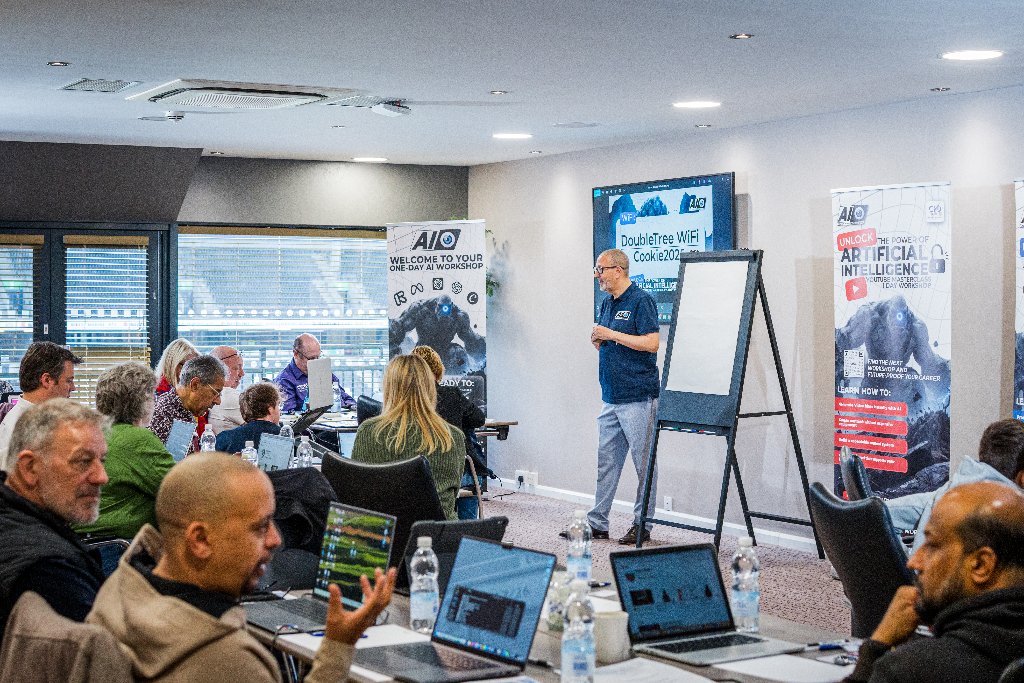
The AI Cyclops LinkedIn Masterclass, held in Milton Keynes on 11 August, is a CPD-certified hands-on workshop covering profile optimisation, content strategy, using AI effectively for LinkedIn, building a relevant network and turning visibility into genuine business opportunities. Tickets start at £199 Standard, with VIP places available at £395.
From AI-curious to AI-confident in one day.
Join one of our hands-on AI workshops in Milton Keynes. CPD-certified, beginner-friendly, and packed with real outputs you can use the same week.
You might also like

AI Can Help You Grow Your Business, But It Can't Replace a Good Conversation
AI can automate your tasks, but it can't have a coffee with someone. Here's why business networking still matters — and how to combine both.
Read more →
AI Consulting for Small Businesses: Start With the Problem, Not the Tool
Not sure what to automate? The AI Cyclops explains why AI consulting for small businesses should start with the problem — not the platform.
Read more →Your Website Might Look Fantastic. But Is It Actually Winning You Business?
A beautiful website and one that wins you business are not the same thing. Here's how small businesses can close the gap.
Read more →