
The Small Business Owner’s Guide To Using AI Without Losing The Human Touch
- Using AI without losing the human touch is entirely possible — it comes down to how you brief and direct the tool.
- Small businesses already hold valuable content in everyday conversations, reviews and customer questions — AI helps you turn those into polished outputs.
- The best AI content sounds like a clearer, more organised version of you — not a generic machine.
- Human judgement is still essential: AI drafts, you decide.
- You do not need to be technically minded to benefit from AI in your business.
- The AI Cyclops CPD-certified workshops in Milton Keynes start from £199 and teach practical, hands-on AI skills built for business owners.
The Small Business Owner's Guide To Using AI Without Losing The Human Touch
If you have ever tried an AI tool and thought, "That sounds nothing like me" — you are not alone. Using AI without losing the human touch is one of the most common concerns we hear from small business owners at The AI Cyclops. The worry is understandable: the last thing any business owner wants is to spend years building a warm, trusted brand, only to have it flattened into bland, corporate-sounding content by a chatbot.
Here is the truth: AI does not make your business sound robotic. Using it without direction does. When you lead with your own ideas, stories and personality, AI becomes one of the most useful tools you will ever add to your workflow. This guide shows you exactly how to do that.
Why Small Business Owners Struggle With Using AI Without Losing The Human Touch
Most people approach AI by typing a vague instruction such as "write me a LinkedIn post about my business" and then feel disappointed when the result sounds like a press release from a company they have never heard of. That is not a problem with AI — it is a briefing problem.
AI tools are generative, not telepathic. They produce output based entirely on the input they receive. If you give them nothing to work with, they fill the gaps with generic language. Give them your real voice, a specific story and a clear goal, and the output shifts dramatically.
According to the Federation of Small Businesses, a growing number of UK small businesses are exploring AI tools — yet many report low confidence in using them effectively. The gap is not technical skill. It is knowing how to brief AI well.
When AI output feels cold or impersonal, it is almost always because the prompt lacked your tone of voice, a real customer story, the actual point you want to make, or clarity on who the audience is. Fix the brief, and you fix the output.
You Already Have Everything AI Needs
One of the most freeing realisations for small business owners is this: you are already sitting on a goldmine of content. Think about what you do each week: answer the same customer questions, send follow-up emails, explain your process to new enquiries, respond to reviews and share advice on calls. Every one of those moments is raw material for a blog post, a social caption or an email sequence. AI does not create your ideas — it helps you express them faster and more clearly.
Once you supply the raw material, AI can assist with:
- Blog post first drafts
- Social media captions and post ideas
- Customer follow-up and onboarding emails
- Proposals and service descriptions
- Meeting summaries and action point lists
The finished piece should always sound like a clearer, more organised version of you — never like a machine that has never spoken to a customer.
A Practical Example: How To Brief AI The Right Way
Weak prompt: "Write a LinkedIn post for my cleaning business."
Strong prompt: "Write a LinkedIn post for my small cleaning business in Milton Keynes. A client told me she cried with relief when she walked into her kitchen after we deep-cleaned it before her mother's birthday party. My tone is friendly and straight-talking. The point: a clean home is about mental space, not just tidiness. Audience: busy working parents. Under 150 words."
The second prompt produces something that actually sounds human — because a human provided the thinking. AI assisted. You led. This is the principle we call human first, AI assisted — the foundation of everything taught at The AI Cyclops AI learning programme.
Using AI Without Losing The Human Touch Means Protecting Your Most Valuable Asset
The human parts of your business — the parts that build loyalty, generate referrals and set you apart from larger competitors — cannot be automated. AI cannot replace the conversation you have with a nervous first-time client, or replicate the trust built from years of showing up reliably.
What AI can do is remove friction from repetitive, time-consuming tasks that eat into the time you could spend on those human things. According to the UK Government's AI Action Plan, AI adoption among small businesses has the potential to significantly reduce administrative burden — freeing owners to focus on growth and customer relationships.
Before anything goes to a customer or prospect, you review it, edit it and approve it. That is not a limitation of AI — it is good practice for any content.
Where To Start: One Simple Weekly Task
You do not need to overhaul your entire business. Start with one specific, repeatable task and do it consistently for four weeks.
- Customer follow-up email — Give AI the key points after a job or call and ask it to draft a warm, professional follow-up.
- Weekly social post — Share one thing you observed this week. Give AI the raw thought and ask it to shape it for your audience.
- Blog idea from a FAQ — Pick one question a customer asked and ask AI to help you turn the answer into a short blog post.
- Short video script — Describe a common problem your customers face and ask AI to help you structure a 60-second explanation.
None of these require technical expertise. See real examples at The AI Cyclops AI in Action page.
Frequently Asked Questions About Using AI In A Small Business
Will AI make my business sound generic or robotic?
Only if you use it without context. When you give AI your tone of voice, real customer stories and specific goals, the output reflects your personality rather than a generic template.
Do I need technical skills to use AI tools in my small business?
No. Modern AI tools are designed for everyday use. You do not need to write code or understand algorithms. You simply need to know your business, your customers and what you want to say.
What tasks can AI help a small business owner with?
AI can help with drafting emails, writing blog posts, creating social media captions, summarising meeting notes, planning content calendars, writing proposals and generating follow-up messages.
How do I keep my brand voice when using AI?
Always give AI a clear brief that includes your tone of voice, a real example of how you write or speak, and the specific point you want to make. Edit the output before publishing so it sounds authentically like you.
Is AI replacing the human side of running a business?
No. AI handles repetitive, time-consuming tasks so that business owners have more time for the genuinely human parts of their work: building relationships, making decisions and delivering great service.
Where can I learn practical AI skills as a small business owner in the UK?
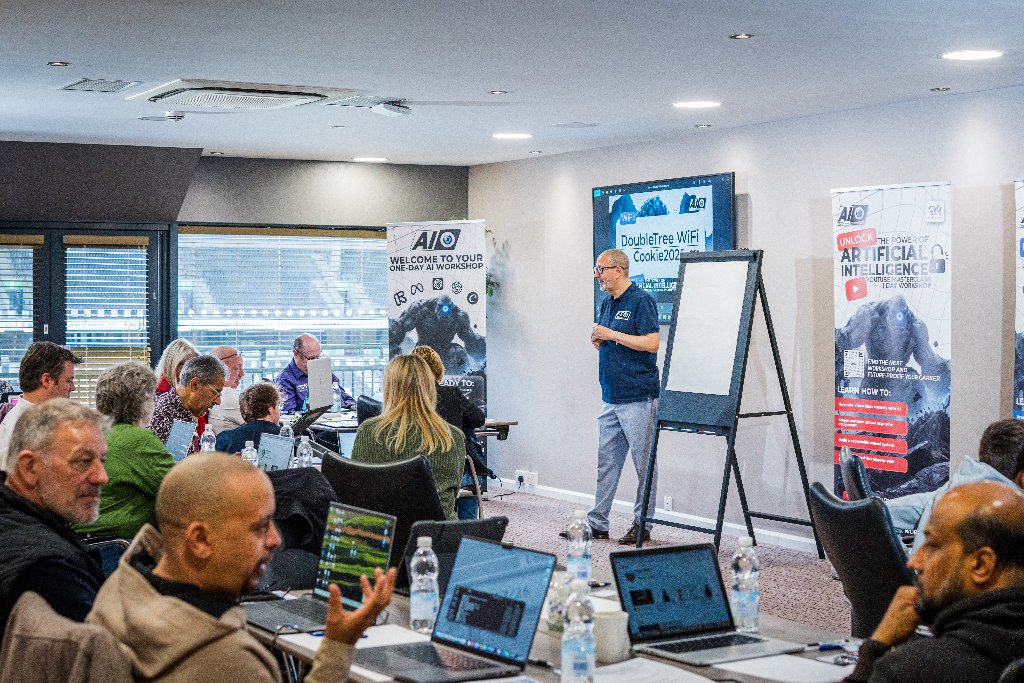
The AI Cyclops runs CPD-certified, hands-on AI workshops in Milton Keynes designed specifically for business owners. Workshops start from £199 for the Standard option and £395 for the VIP experience, with practical skills you can apply immediately.
From AI-curious to AI-confident in one day.
Join one of our hands-on AI workshops in Milton Keynes. CPD-certified, beginner-friendly, and packed with real outputs you can use the same week.
You might also like

The AI Skills Gap: Why Businesses Can't Afford to Wait for the Next Generation
The AI skills gap is growing faster than most UK businesses realise. Practical training — not more software — is the answer.
Read more →
AI Can Help You Grow Your Business, But It Can't Replace a Good Conversation
AI can automate your tasks, but it can't have a coffee with someone. Here's why business networking still matters — and how to combine both.
Read more →
AI Consulting for Small Businesses: Start With the Problem, Not the Tool
Not sure what to automate? The AI Cyclops explains why AI consulting for small businesses should start with the problem — not the platform.
Read more →