
Stop Posting Into the Void: How to Turn One Customer Question Into a Week of LinkedIn Content
- The Source-First approach builds your LinkedIn content strategy from real customer questions rather than generic ideas requested from a chatbot.
- One customer email or DM can become a text post, a carousel and a short video script using a simple one-to-many workflow.
- A Voice Guard checklist helps you strip out AI-isms so your content still sounds like a real UK small business owner, not a corporate brochure.
- Tracking replies and direct messages, rather than likes, is a far better measure of whether your LinkedIn content strategy is actually bringing in business.
Why Most LinkedIn Content Strategy Advice Fails Small Businesses
If you've ever typed "give me 10 LinkedIn post ideas for my business" into an AI tool, you'll know the result. Generic advice, vague statements, and a strong whiff of corporate waffle that nobody in Milton Keynes would ever actually say out loud. The problem isn't the AI. The problem is the question. Asking for "ideas" invites invention, and invention is exactly where AI-generated content goes wrong.
A better LinkedIn content strategy doesn't start with a blank page and a prompt asking for creativity. It starts with something that already happened this week: a real question a real customer asked you. That single change, from "give me an idea" to "here's what actually happened," is the difference between content that sounds hollow and content that sounds like you.
What Is the Source-First Approach to LinkedIn Content Strategy?
The Source-First method is simple. Before you open any AI tool, go through your inbox, your WhatsApp, your DMs, or your memory of conversations from the past seven days. Find one specific question a customer or prospect asked you. Not a theme. Not a topic. An actual question, in their words if possible.
Examples might include:
- "How long before I'll actually see a difference from using AI in my business?"
- "Is this going to replace my staff, or help them?"
- "Can you do this for someone who's never used AI before?"
Once you have that question, you feed it to the AI as the source material, not as a request for ideas. This keeps the content grounded in something true, which is the whole point of a sustainable LinkedIn content strategy for a small business that doesn't have a marketing team or an unlimited budget.
A question someone actually asked you is worth more than a dozen AI-generated "content ideas," because it already proves there's demand for the answer.
The One-to-Many Workflow: One Question, Five Posts
Here's where the real time-saving happens. A single customer question can be reshaped into several different formats without you having to come up with anything new. This is the "one-to-many" workflow, and it's the backbone of a practical LinkedIn content strategy for anyone juggling marketing alongside the day job.
- Text post: A short, direct answer to the question, written in your voice, ending with an invitation for others to share their experience.
- Carousel: Break the answer into 4-6 slides, one point per slide, using the same facts but in a visually scannable format.
- Short video script: A 60-second talking-head script where you read the question aloud, then answer it as if the customer were sitting across the table from you.
- Comment reply bank: Pre-written responses you can adapt when people reply, keeping the conversation going without scrambling for words.
- Follow-up post: A week later, a short update referencing the original question, closing the loop and showing the topic still matters to you.
Five pieces of content, one real conversation, zero invented ideas. If you want to see this workflow applied to other everyday business tasks, our real-world AI examples page shows similar one-to-many approaches outside of marketing too.
Worked Example
Say a customer emailed you: "Is this going to replace my staff, or help them?" Fed into the right prompt, this becomes a text post explaining your actual view on AI and jobs, a carousel titled "3 things AI replaces vs 3 things it never will," and a 60-second video where you answer the question directly, using the same honest line you'd give the client over coffee.
The Voice Guard Checklist: Keep It Sounding Like You
AI drafts have a habit of sliding into phrases that no UK small business owner would ever say out loud. Before you post anything, run it through this quick check:
- Remove phrases like "in today's fast-paced world," "unlocking synergy," or "navigating the ever-evolving landscape."
- Cut any sentence that could apply to literally any business in any country. If it's not specific to you, it's not worth posting.
- Read it aloud. If you'd feel awkward saying it to a client in person, rewrite it.
- Check for over-formality. Most small business owners don't talk in bullet-pointed corporate English, so your post shouldn't either.
- Replace generic adjectives ("innovative," "cutting-edge") with a specific fact or number where you can.
This Voice Guard step is non-negotiable for a credible LinkedIn content strategy. Skipping it is how perfectly good small businesses end up sounding like every other LinkedIn account that's clearly copy-pasting from a chatbot.
Copy-Paste Prompt
Use this exact structure when you've found your source question:
"Here is a question a client asked me: [paste]. Write a LinkedIn post answering this in my voice. Use only the facts provided. Do not use emojis or hashtags. End with a question that invites a reply."
That last instruction matters more than people realise. Posts that end with a genuine question invite replies, and replies are worth far more than silent scrolling.
Human-in-the-Loop: Why the AI Draft Is Never the Final Post
Whatever comes back from the AI is a draft, not a finished post. This is the Human-in-the-Loop rule, and it's the step most people skip when they're in a rush. The AI doesn't know your client's specific outcome, the detail about the Milton Keynes warehouse that had the stock problem, or the throwaway comment that made the conversation memorable.
Before publishing, add at least one of the following:
- A specific client detail (anonymised if needed) that proves this actually happened.
- A local nuance relevant to your UK audience or region.
- A personal observation or opinion the AI couldn't possibly have guessed.
This one habit is what separates content that builds trust from content that quietly damages it. We cover this balance of speed and authenticity in detail during our hands-on AI workshops in Milton Keynes, where small business owners practise this exact editing step on their own real examples.
Measuring What Actually Matters (Not Likes)
Likes feel good, but they rarely lead anywhere. A far more useful measure of your LinkedIn content strategy is how many people reply in the comments or send you a direct message after reading. These are the signals that someone is genuinely interested, not just scrolling past.
| Vanity Metric | Meaningful Metric |
|---|---|
| Likes | Comments that ask a follow-up question |
| Impressions | Direct messages started after the post |
| Follower count | Profile visits that lead to an enquiry |
Keep a simple note each week: how many posts, how many replies, how many DMs. Over a month or two, you'll see which source questions generate the most conversation, and that tells you what to ask your customers about next.
Frequently Asked Questions
How often should I post using this method?
Once or twice a week is enough for most small businesses, as long as each post comes from a genuine customer question. Consistency matters more than volume.
What if I don't get a customer question every week?
Look back through older emails, enquiry forms, or comments from past jobs. Most businesses have more unanswered questions sitting in their inbox than they realise.
Do I need special tools for this LinkedIn content strategy?
No. A general-purpose AI chatbot and your existing inbox are enough to start. Always check the provider's current features and terms before relying on any specific tool.
Will this work if I'm not confident writing in my own voice?
Yes, because the Voice Guard checklist and Human-in-the-Loop step exist specifically to help you shape AI drafts into something that sounds like you, even if writing isn't your strength.
How is this different from general AI content advice?
Most advice asks AI to invent ideas from nothing. The Source-First approach only ever starts from something real that already happened, which keeps the output honest and specific.
Can The AI Cyclops help my team learn this properly?
Yes. The AI Cyclops runs practical sessions covering this exact workflow, and you can also explore our online AI courses or get in touch directly to discuss your business.
If you'd like to practise this LinkedIn content strategy with real examples from your own business, our services include hands-on marketing sessions built for UK small businesses. Join our next workshop at Practical AI for Marketing and turn this week's customer question into next week's content.
From AI-curious to AI-confident in one day.
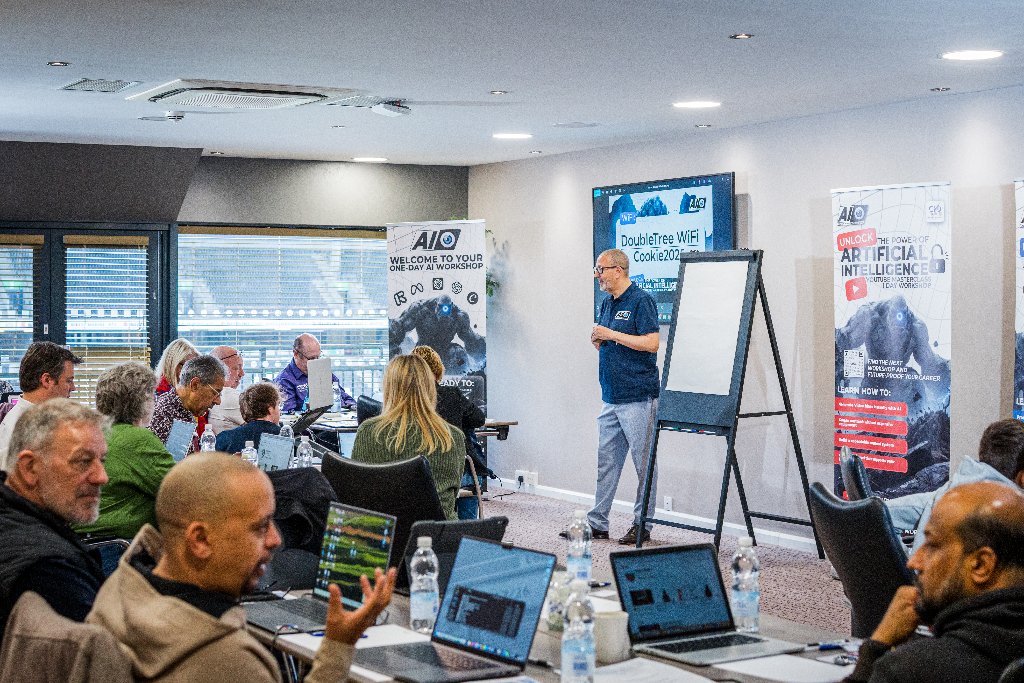
Join one of our hands-on AI workshops in Milton Keynes. CPD-certified, beginner-friendly, and packed with real outputs you can use the same week.
You might also like

2027 Is Almost Here: Is Your Business Ready to Make AI Work for You?
AI for small business is practical and affordable right now. Discover five steps to prepare for 2027 with CPD-certified AI training in Milton Keynes.
Read more →Stop Booking Generic AI Courses: How to Build a Custom Training Plan for Your Team
Why generic AI training fails and how to build a custom AI training plan around your team's real tasks, policy and follow-up.
Read more →
The 4-Week Pilot: How to Safely Launch Your First AI Agent
A practical four-week AI agent pilot plan with guardrails, review logs, and a clear Definition of Done for UK businesses.
Read more →